Bryan's Farewell
On the last day of May, I realized Bryan was gone.
There is no evidence to prove Bryan’s departure. We didn’t need a farewell, so there is no exact time for his leaving either.
I realized this on my way home from work. That night, I was walking across from Tsinghua University. It was past 10 PM, and the bike shed was probably locked, so I decided to leave my bike at the office and follow my late-night routine: orange juice, music loud enough to drown out the street noise, and a touch of leisure. After about two hundred meters, passing the only spot on Tsinghua East Road where you can see the full moon, the thought crept into my mind—Bryan seems to have left.
On my way downstairs, I saw two people casually sitting cross-legged on the marble platform next to the stone lions at the building entrance, chatting, possibly with drinks. I only dared to glance; a direct stare might be impolite, or perhaps they wouldn’t care even if I stared, but at least I had to protect the rare image of these two people in my mind. What were they talking about? Was it about the present, the past, or the future? Was it a chance encounter, or were they keeping a not-too-distant appointment? I had no way of knowing. I turned and walked into the convenience store, toasting them from afar with my orange juice.
Tsinghua East Road, from my observation, has a slight incline. Or, according to S, it’s just that the way home feels easier because going to work always carries a bit of resistance. My attention shifted to the depths of my mind, pondering another farewell I never received, and the reason my roommate left without a word. We had discussed renewing the lease early on, and the conclusion was that he would move out. Unexpectedly, the morning I woke up, my roommate, with whom I had played Plants vs. Zombies just the night before, had vanished along with all traces of his life there. It’s hard not to wonder if you did something wrong, to imagine what he would have done if I were a true friend to him—but from the premise of leaving without a word, I was clearly not a qualified friend, and that is deeply saddening.
But deep down, I couldn’t ignore the major premise—we were indeed true friends. Because hearts are not made of stone. Even someone as introverted as my roommate, always afraid of causing trouble and thus so reserved, could be moved by life. Those late-night discussions that started with technology and branched into technology itself, people, and the world; those interesting logical traps and puzzles: what is the contrapositive of “If you haven’t been to the Great Wall, you’re not a true man”?; we assumed we were machines, trying to start from mechanical logic to see what interesting conclusions we could reach. This often kept us, who had decided to sleep early, up until three or four in the morning, yet we never learned our lesson the next day. Or simple greetings, or walks. All these things at least fulfilled my own definition of friendship. Although you can never truly know what another person is thinking, based on past experience, the other person would only engage in the behaviors I described above if they shared the same thoughts.
I thought, perhaps I would receive a letter, or a foreseeable final farewell.
There was no uncertainty; I would wait for that letter forever.
At this point, I began to feel certain that Bryan, as an independent person, had completely disappeared. I could find no trace of him in my mind.
Memories of Bryan also grew hazy. He always seemed to carry a certain melancholy, different from mine. His sadness was purer, without any concrete reason. Perhaps he enjoyed this moon-like melancholy, savored the loneliness that simmered in his chest like a slow fire. Or perhaps it was a ritual of his, cleansing his soul through sorrow.
Bryan’s last story happened a few days ago when the electromagnetic door downstairs wouldn’t open. He was holding a bag of trash, ready to go out and throw it away, then buy himself a bag of whole-grain bread from the bakery for dinner—I had been at home all afternoon. Bryan repeatedly pressed the door switch—no use. He pushed against the door with his body—still no use, not even making much noise, just a dull thud.
The logic is simple. For example, if we have ample supplies, staying home for ten days or half a month without going out is no problem. But once we know the door is locked from the outside, the taste of freedom instantly becomes irresistibly tempting. At that point, you can’t stand being home for even an hour. You’d jump out the window just to get out; there’s no room for negotiation. Bryan was the same. The thought of just eating something at home crossed his mind, but simply because the door was broken, he had to go out. Going out became the sole reason, motivation, and purpose. Dinner became less important.
So Bryan heard the crows cawing outside, as if he had become one of them. He went to the stairwell between the first and second floors, opened the window leading to freedom. The window was small, only big enough for him to squeeze through curled up, but Bryan felt as happy as if he were flying. On the second-floor platform, gripping the security bars, Bryan imagined himself a skilled explorer, extending his foot to find a foothold. The final step was stepping onto the mailbox of the building unit, then jumping down, breathing in freedom as tangible as the air. I took out my key, tentatively tried opening the door from the outside—it opened. Grabbing the trash, I embarked on the quest for dinner.
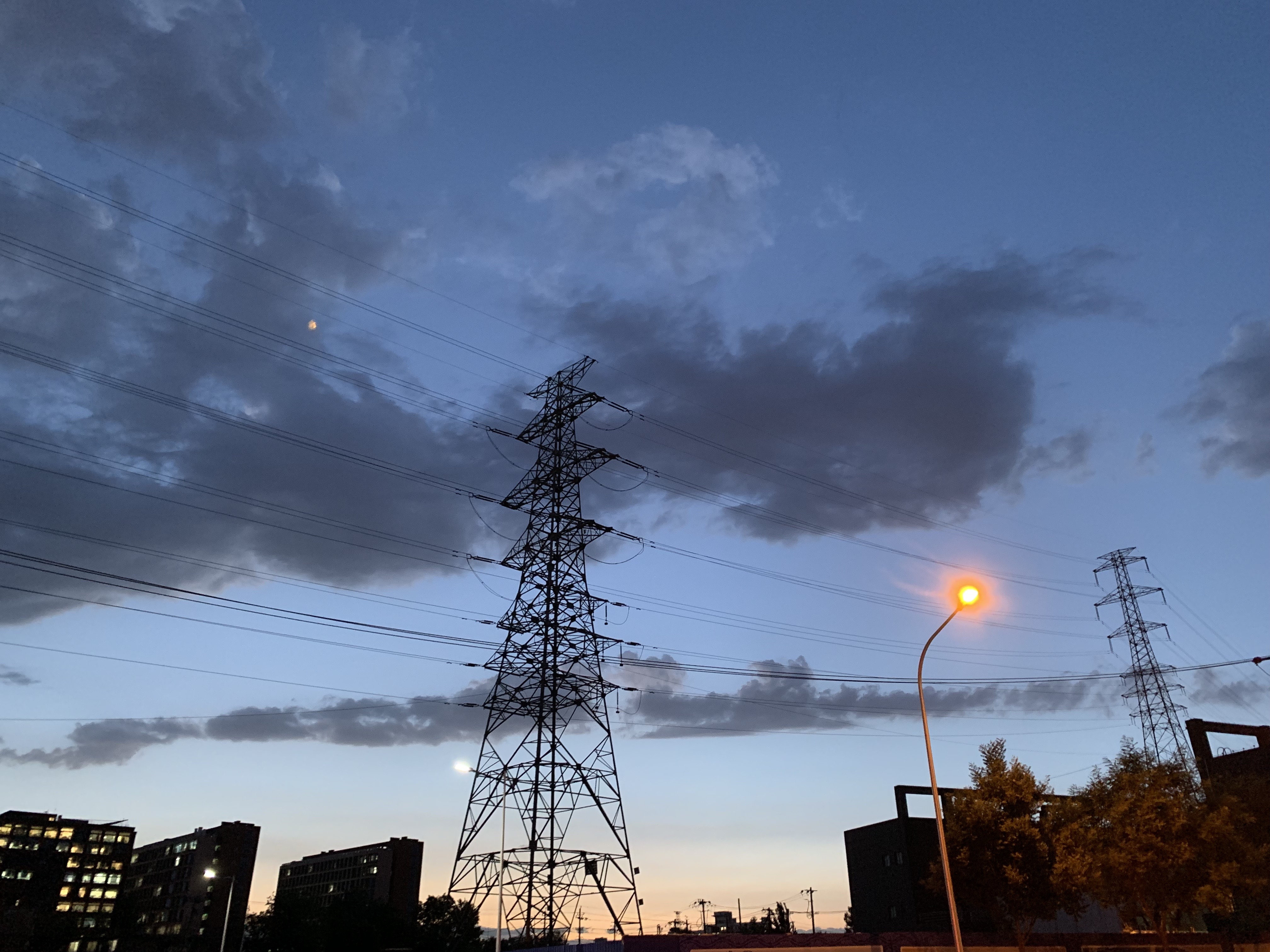
That night, I witnessed such a magnificent sunset.
I finally received that email from my roommate—his apologies and gratitude. The entire message was proof of our friendship. After being roommates for 211 days, I was considered a warm person, a qualified friend. And after about a year of reflection and self-cultivation, along with recent signs, Bryan, the persona I used to escape my own negative emotions, has disappeared. The event years ago that gave birth to Bryan and had long tormented me as Bryan ultimately made me a more authentic and composed person.
Frank Lloyd Wright’s words can serve as the final verdict on the entire Bryan episode:
Unconscious hypocrisy is terrible enough, but for any creative artist, conscious hypocrisy will more ruthlessly corrode his soul. No coward has ever created a work of art. I believed that then, and I still believe it today.
Finally, a summary. Previous writings mentioned that I couldn’t see my own path clearly but wasted effort on trivial skills. Now I realize that no matter what goals I have, all my efforts are aimed at becoming a better person—someone emotionally stable, clear-headed, self-aware, focused, and abundant. The conclusion from my graduation still holds true:
I foresee that the life ahead will still be full of opportunities to make benign mistakes and moments of making no mistakes at all. The process won’t be easy or pleasant, but it will be absolutely fascinating.
And life is indeed like skiing: turn left, turn right, or think about it and die. We don’t just have life; we are possessed by it.