Little Paw Prints on the Curtain
A while ago, I returned to Suzhou. Grape didn’t come back with me. As I turned off the lights and prepared to sleep, I noticed several deep little paw prints on the curtain. I couldn’t hold back any longer. In the middle of the night, I got up from bed and began to think about the more than half a month Grape spent alone at home—time, and the things that flow with time, the things that have influenced me in life.
In a previous article, we discussed the shape of time, its power, its playfulness and mockery. One point particularly worth emphasizing is that the speed at which time passes varies depending on a person’s state. The Boss and I have observed that recently it seems to be accelerating exponentially: it feels as if half of this year passed in an instant. Yet, upon careful thought, it seems last year was the same. I always think it hasn’t been long since I last wrote an article, but it has already been over a year.
Although this year passed quickly, it was also rich. Yet, beyond richness, it also carried the breath of life and the witnessing of life.
And all of this indeed began over a year ago, in the days before time began to accelerate, with a book, an architect who wrote himself into a book.
On February 11th of that year, daidai sent me a picture—the cover of a book that read: An Autobiography: Frank Lloyd Wright.
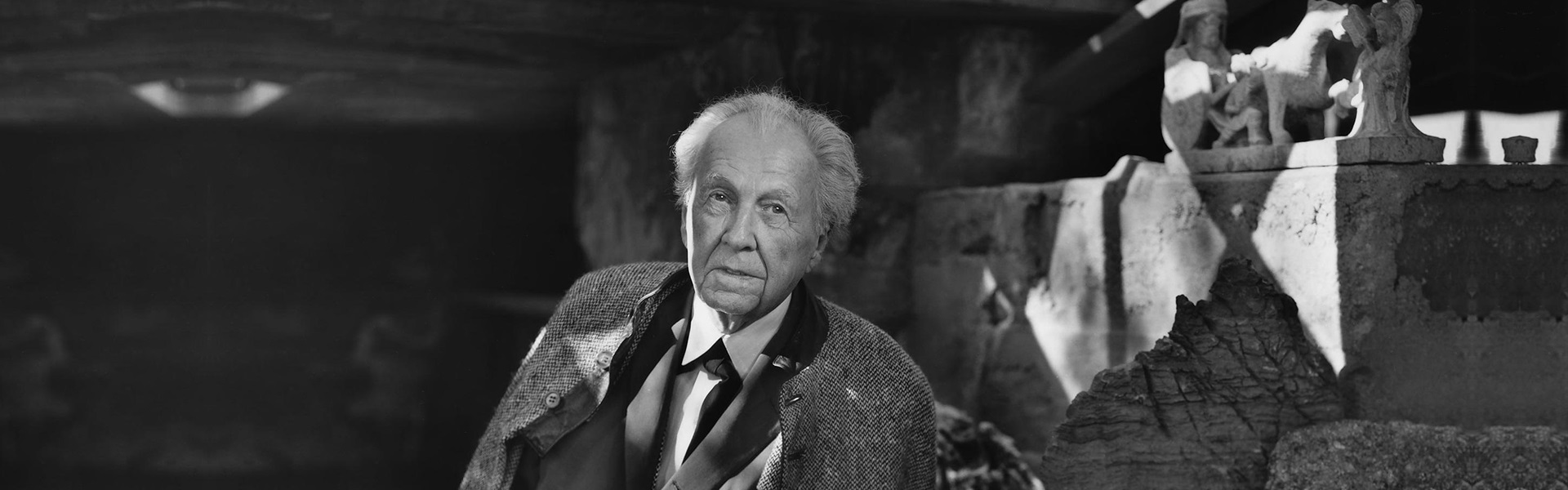
“You’ll like it.”
And so, this architect who hated sentimentality yet was delicate and rich came to live in my mind.
By revisiting his life, he taught me two important things for witnessing this world:
The first is style. The formation of style requires time to catalyze. First, we need to solidly master the basics, reaching a state where we can act freely without overstepping boundaries. Using riding a bicycle as an analogy: in the end, you don’t need your hands to steer; you use your body, or your heart. If you think about riding over the solid line on the bike lane, you won’t deviate. After the foundation is laid, it becomes a specific creative process. Facing a problem domain, we raise the questions that trouble us on the critical path, then use the foundation we’ve built to solve problems or express emotions.
The moment we put the finishing touch, style quietly arrives. What we need to do then is welcome and appreciate it. This is a joyful moment.
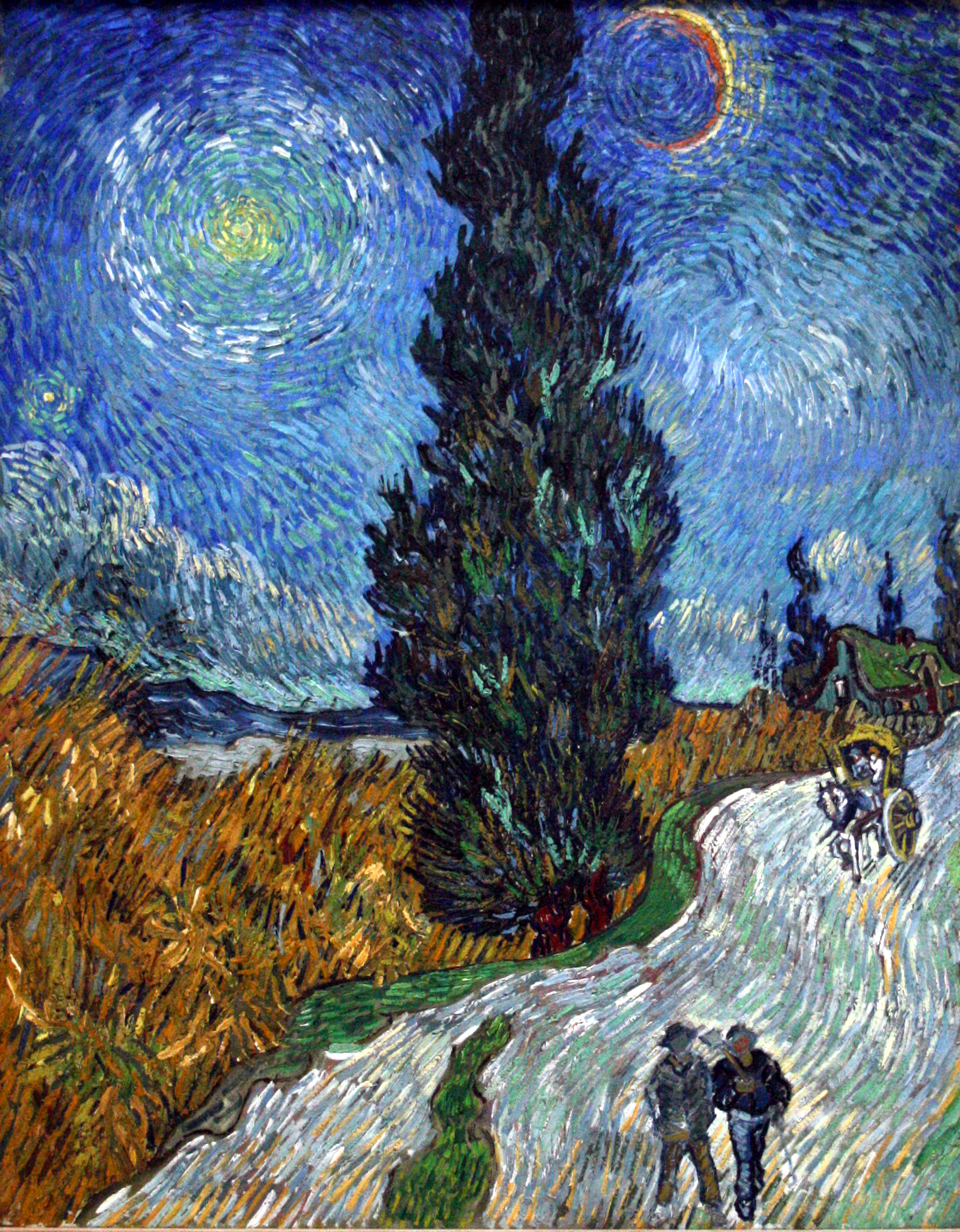
What is style? It’s like the tangible colors in the objective world. Take Van Gogh’s paintings, for example. He would exaggeratedly express certain phenomena existing in the world, not sparing his ink, and in some parts, it could be said to be quite rough, forming a strong distinctiveness. This distinctiveness should be considered a manifestation of style. However, everyone appreciates this beauty in different ways, appreciates his paintings, or may not even find them beautiful. Is the understanding of style a completely subjective feeling?
What is good style? This leads to the second important thing the architect talked about: taste. Who possesses such good taste that they can appreciate a specific work of art and taste the style that is almost palpable?
Like the cypress trees and starry night in Van Gogh’s brushstrokes; the haunting song of the nightingale in Keats’ poetry; Beethoven’s picturesque, vibrant Sixth Symphony; these universally recognized excellent works, each unique, yet each possessing a solid, graceful power that can transcend time and space, cross the barriers of the human heart, make people firm; give people meaning, and lend coherence to life.
However, appreciating these works undoubtedly requires a certain degree of training. Take “Ode on Melancholy” as an example: Aye, in the very temple of delight, Veil'd Melancholy has her sovran shrine. When I first read it, I was just at the age where I had an adult’s mind but little worldly experience. I only felt the meaning of this line was obscure. As I learned about Keats’ life and slowly began to pay homage to the shrine of melancholy in my own life, it started to grow in my heart in a unique way.
Or take drama as an example: "Why did Heisenberg return to Copenhagen in 1941?" Why did that brief meeting at Bohr’s home in Copenhagen end the twenty-year friendship between Heisenberg and Bohr? This question, which has haunted the public for over half a century, serves as a clue in the play Copenhagen, forming the background and foundational framework of the entire play. In reality, it cleverly dramatizes how complex the human heart can be. Behind a single decision and action collapsed into reality, there may be a dozen or dozens of motives in a state of superposition.
Heisenberg was an old friend of the Bohr family and also a German sharing the guilt of war crimes; he was like Bohr’s most outstanding son, while also bearing the roles of husband and father himself. And his motives were even more numerous than his identities: Was it because Heisenberg wanted to prevent the birth of nuclear weapons? Because Heisenberg wanted to shoulder the heavy burden of reviving the entire German scientific community? Because Heisenberg had become the youngest professor in all of Germany? Or because Heisenberg was simply like a homesick child? Or perhaps Heisenberg himself didn’t even know why he came, and this state of confusion and chaos expanded exponentially like a chain reaction, ultimately saving all the cities that were not bombed with nuclear weapons by Axis Germany. Humanity! A collection of contradictions!
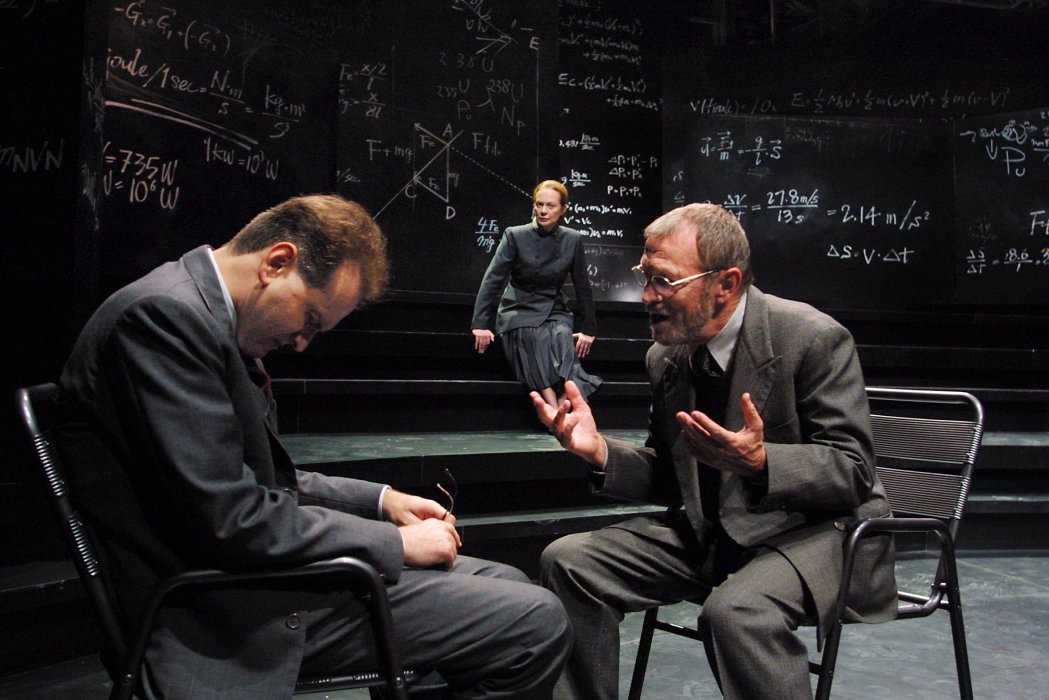
In the summer of 2018, Little Lion took me to see this play at Peking University. Since then, it has lingered in my heart, growing richer with each revisit. This is perhaps the process of building taste: first, it enters my memory, and as life goes on, scenes from the play are enacted in reality in various different yet connected ways, allowing me to appreciate it further. At the same time, it also guides my real life, granting equal respect to the dozen or so motives behind other people’s decisions.
So what is taste?
You could say taste is entirely dogmatic, a logically self-consistent virtual system, thus building bridges between people’s hearts, with the destinations of these bridges completely unrestricted. You could also say taste should be objective, transcending human likes and dislikes, merely a reflection of the real world in the human heart.
The architect didn’t provide an answer; he simply assumed taste exists. Whether dogmatic or an objective existence, it is actually contradictory yet unified. It must reflect some attribute of reality, hardly contradicting it, yet also not stopping at reality and mechanical materialism. It provides guidance for human reason and aesthetics; it constructs civilization upon the foundation of the real environment. These rich works provide me with raw materials. Like poetry, I might not understand them at first meeting, but by often recalling them, often resonating with them, they constitute my taste.
Style and taste, like apply and eval, follow the way of nature, constructing the architect’s rugged yet abundant life.
Every time I open that autobiography, no matter my mood, I ultimately return to a harmonious tranquility. How should a person spend their life? I hope to be as abundant as the architect.
When I read about Frank’s final decision to join Sullivan’s firm and say goodbye to his former boss, he had a passage in his autobiography like this:
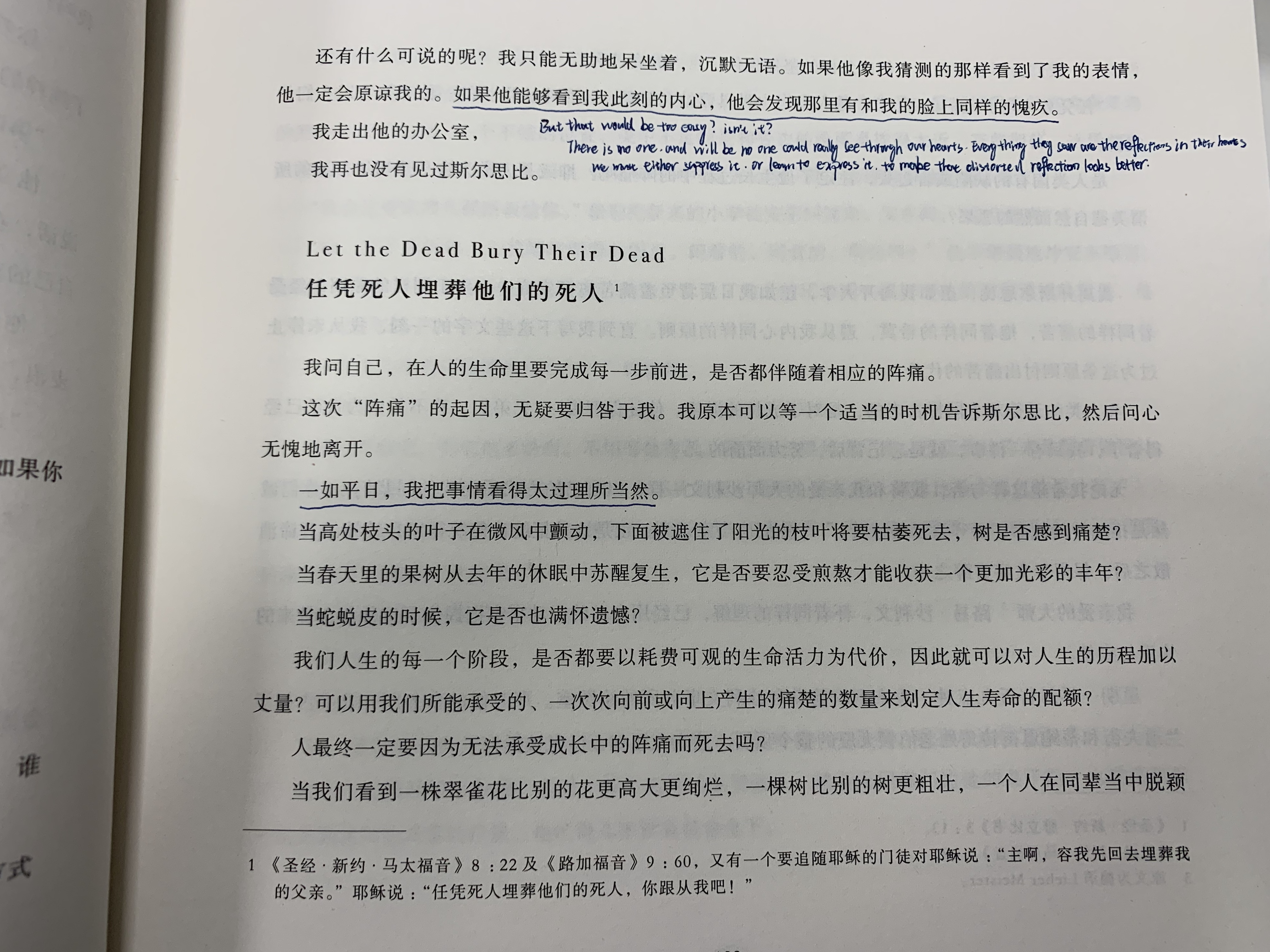
This scene stayed in my memory for a long time, until I had a similar experience myself, and then I knew all the preparation was useless; the pain came unexpectedly. Just like the little paw prints on the curtain, during the days and nights I was away, Grape walked onto the bay window countless times, scratching the curtain with her little paws, earnestly hoping that the moment she scratched, I would appear behind the curtain to respond. She scratched and scratched, her claws, sharp from not being trimmed for too long, caught on the curtain, pulling out those little paw prints.