2023-06-03
Only my throat hasn’t fully recovered, and I’m annoyed that I can’t fall asleep because I need to clear my throat or cough every minute;
So I’ll try to summarize my impressions of watching the anime during these sick days.
I watched both seasons of Re:Zero in one go (two days counts as two breaths, I suppose?), so the happy part is that there was no week-long wait and agony—I knew the ending immediately. The downside is that I took in a huge amount of emotional projection, both joy and pain, all at once, and after finishing, I had to endure the immense emptiness that comes when those emotions fade away (after finishing Season 1, I felt so empty that I had to continue with Season 2, which only led to greater emptiness).
With this sense of nothingness as the baseline, that’s the theme of today’s post-watching reflections.
If I were to describe that feeling…
(Imagine there’s a Markdown renderer here)
Forlorn, the very word is like a bell to toll me back from thee to my sole self! Forlorn—this word tolls like a bell, dragging my soul from your embrace back to my solitary self!
In “Ode to a Nightingale” (worth reading—you can even find a version with Benedict Cumberbatch’s sexy low voice narration), the poet imagines following the owner of the beautiful song into a deserted deep forest, into the gentle night sky, into a summer garden, into the embrace of death to turn into soil, boarding the poetic ship of imagination to travel to distant legends and stories, until finally
—Forlorn! That is, emptiness or a sense of nothingness. The song fades away, the poet realizes he is ultimately alone, and the nightingale that carried the poet’s infinite emotions and imagination escapes like a little elf.
Let’s stop the poetry analysis here for now. Back to Re:Zero, setting aside its fan-service elements (though a considerable part of the joy comes from that), I would describe it as intense. I really like the parts where Subaru is brutally killed again and again in death loops, and I even think these are more important than the climaxes that follow. According to Playground, many people dislike these scenes and think the protagonist is a complete loser—too hard to watch. But I think the author is far more merciful to the protagonist than I expected: the fatal situations Subaru faces are almost always solvable just by having the right information, and the easiest gift from the death loop is precisely infinite information asymmetry. So as viewers, we get to see Subaru suffer the cruelest torments, then go mad, then rise up and challenge them, finally breaking through—a dramatic cycle of high and low, repression and release.
Reversal is the movement of the Dao. I believe joy and pain are two sides of the same coin; they don’t even form a true opposition. They are both abundant emotional experiences, vibrant life forces.
Just as the universe is most alive when it has both the hottest sun and the absolute zero of coldest space—true stillness is when nothing moves anymore, falling into heat death, where time stops in eternity. The opposite of joy and pain is boredom. In our daily lives, we fear most that nothing happens—not the rest after hard work, but the state where nothing ever happens, and nothing will ever happen again. Subaru’s journey is never boring; that’s what attracts me most. My soul also left my sick body, following him on two meaningful journeys with real outcomes.
So when it all ended, forced to withdraw from Subaru’s adventures, and having to endure insomnia due to throat symptoms, I was left with nothing but emptiness.
(Why don’t I mention eternal recurrence when talking about emptiness? Because although death loops and eternal recurrence are a tiny bit similar, Subaru’s save points move forward, so they are completely different.)
To put it simply, this feeling must be because I think real life isn’t as exciting as Subaru’s journey.
But to put it pessimistically and pretentiously:
Life is too short—it feels like not much has happened, yet a long time has passed. Time passes too slowly because interesting things are sparse. Opportunities are too few and fleeting. We are too foolish, always letting the most recent experiences occupy our entire mind, knowing that we cannot suddenly obtain things, and leaving our lingering echoes to the sad wind.
But you can always imagine Su Shi in that little boat, saying these words, and then he starts to lecture: “Guest, do you also understand water and the moon…”
I always feel that this kind of anime encourages Japan’s younger generation to step out of their homes, to use real life experiences to erase the sense of emptiness. Since the most recent experiences occupy the most mind space, we should use the most continuous daily life to constantly fill that most recent space. Use this as momentum to push ourselves forward, while also having the ability to detach and remain calm and composed.
I told Playground, who recommended this work to me, that we should create a world where everyone can embark on a new journey, and we should strengthen the connections between people.
This is also one of the reasons why I like posting about random stuff.
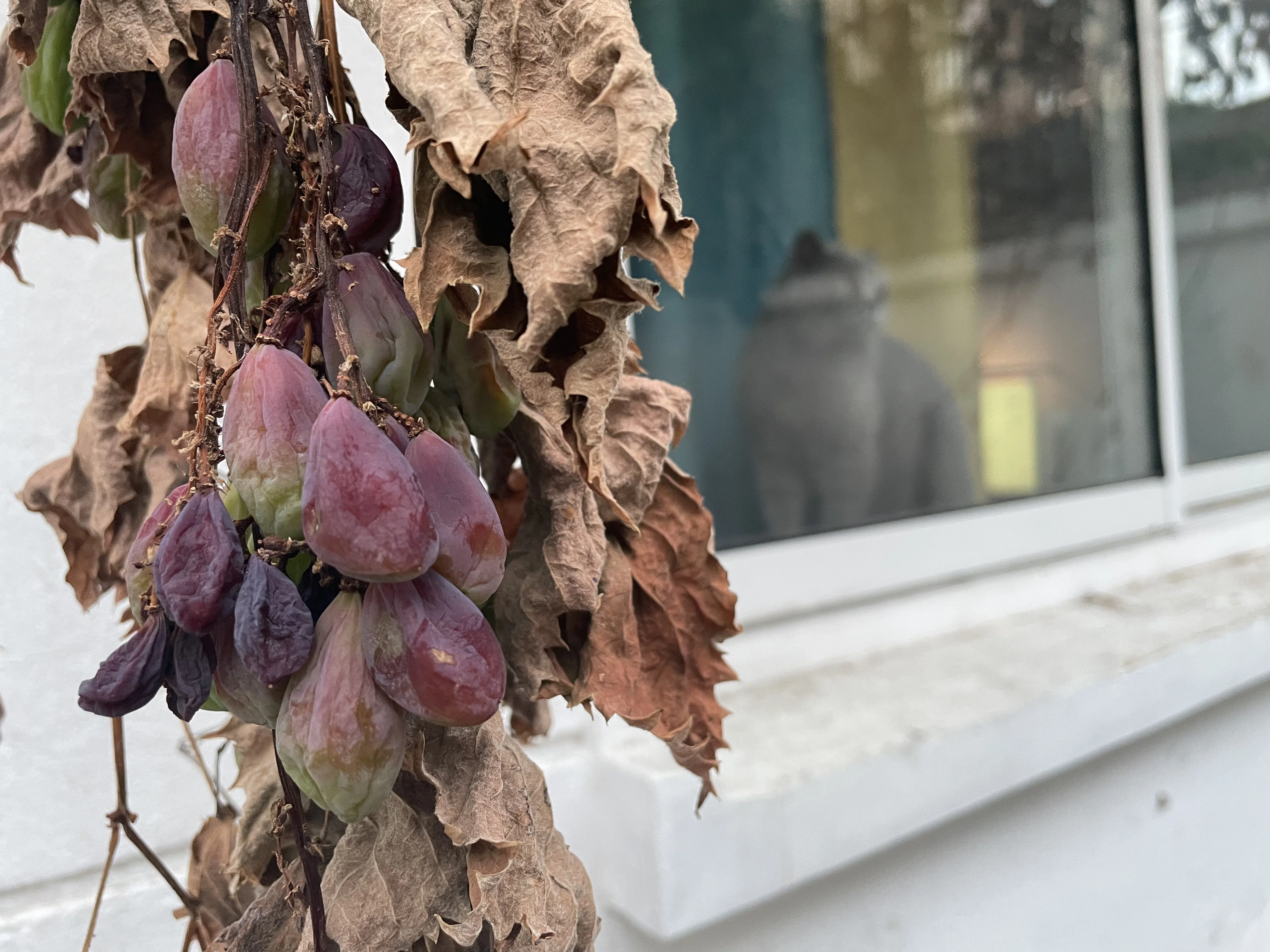
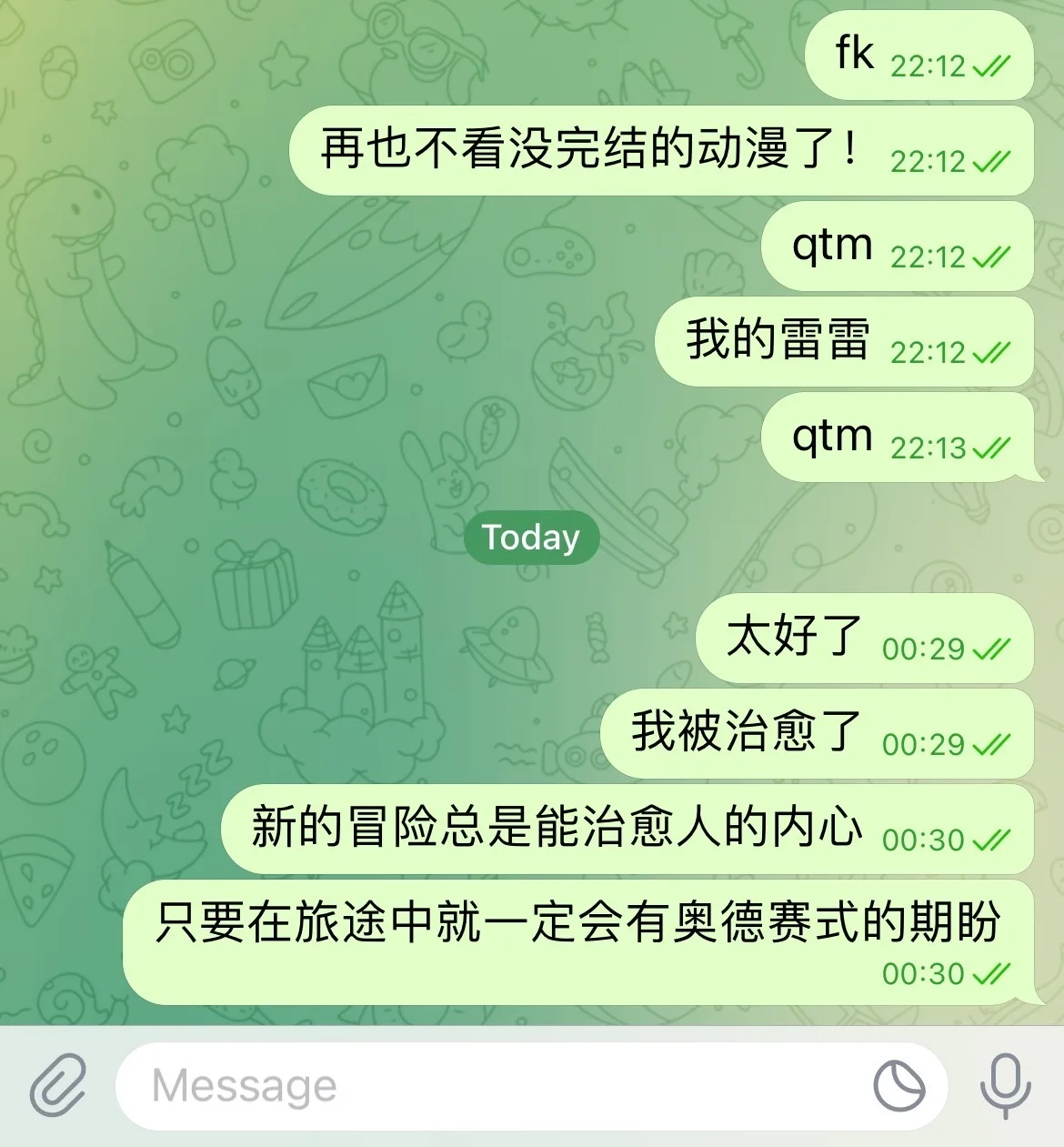
Image 1: The tiny posthumous offspring of grapevines in the backyard of the house where I once lived—they were roughly cut down when dead. The grapevines are gone. But nobody ever planted them, so no matter how many times they are cut down, in some future summer, tiny grapes will grow again. Image 2: My movie-watching rant after finishing Season 1, feeling upset for a while, then continuing to Season 2.
- 🎦 Movie-Watching Musings